What to Do When a Tree Falls on Your House: Step-by-Step Emergency & Insurance Guide
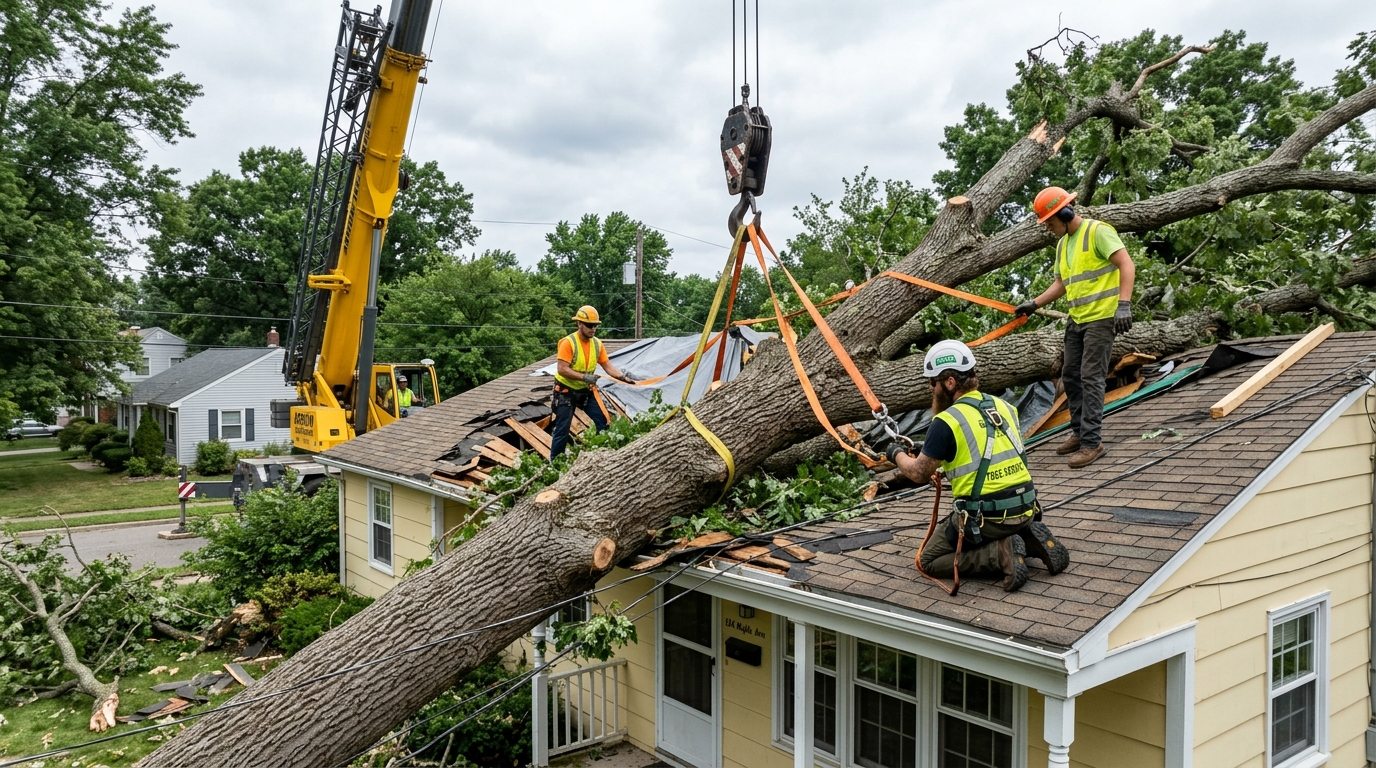
If a tree falls onto your house: 1. Evacuate all occupants and pets immediately to a safe location outside. 2. Check for severed power lines or the smell of natural gas; if present, call 911 and utility companies from a safe distance. 3. Do not re-enter the home to retrieve belongings until structural integrity is confirmed. 4. Call a 24/7 emergency tree dispatch service to coordinate crane extraction and structural tarping. 5. Notify your homeowners insurance company to initiate your claim.
The sound of a mature hardwood tree collapsing through a residential roof is deafening and terrifying. In the moments immediately following impact, shock and confusion can cause homeowners to make dangerous errors—such as climbing onto a cracked roof or attempting to cut branches with a personal chainsaw. When you face an active tree crisis in Western Pennsylvania, relying on qualified emergency tree removal in McKeesport is essential to protect both human life and your home's structural framing.
Phase 1: Immediate Life Safety & Utility Evaluation (Minutes 0–15)
Your first and only priority during the first quarter-hour is ensuring every occupant is safe and out of the danger zone:
- Evacuate the Structure: A fallen tree places tons of live weight on roof rafters and load-bearing drywall. A ceiling that appears intact immediately after impact can collapse minutes later under shifting weight. Move everyone outside to the opposite side of the yard or a neighbor’s house.
- Inspect for Downed Electrical Drops: Trees rarely fall on houses without dragging electrical service cables, telephone lines, or cable drops. Assume every downed wire is energized. Stay at least 35 feet away and immediately call Duquesne Light at 1-888-393-7000 and 911.
- Check for Gas Leaks: Severe structural impacts can shift home foundations or shear gas riser pipes entering the basement. If you smell the rotten-egg odor of natural gas, evacuate the neighborhood block immediately and alert emergency dispatchers.
Phase 2: Securing Professional Emergency Extraction (Minutes 15–60)
Once all individuals are accounted for and utilities secured, your next call should be to an emergency tree service capable of handling structural extractions:
- Why Routine Landscapers Cannot Handle This: Removing a tree from a roof requires specialized rigging, balance calculation, and often a hydraulic crane. A standard tree company with only chainsaws and pickup trucks risks dropping the tree through your ceiling joists. Dispatched specialists utilize crane-assisted tree removal to lift timber vertically without applying lateral friction against rafters.
- Initiate Priority Dispatch: Call our 24/7 emergency dispatch line at (412) 658-9875 to mobilize a qualified, fully insured crew equipped with heavy rigging apparatus directly to your McKeesport address.
Phase 3: Navigating Homeowners Insurance Claims & Mitigation (Hours 1–24)
Homeowners often wonder: "Does homeowners insurance cover a tree fallen on my house?" In Pennsylvania, standard HO-3 and HO-5 homeowners policies cover physical damage caused by fallen trees resulting from windstorms, hail, or snow weight.
The "Duty to Mitigate" Requirement
Every insurance policy contains an explicit contractual clause requiring the policyholder to take reasonable steps to prevent further damage. If a fallen tree leaves a hole in your roof and you allow subsequent rainstorms to soak your home for days without action, the insurance carrier may refuse to reimburse interior water damage.
Dispatched contractors fulfill this legal requirement by performing immediate weatherproofing through emergency roof tarping. They securely fasten industrial woven tarps over framing punctures using 2x4 furring strips, keeping the structure watertight until permanent roofing contractors can perform structural repairs.
How to Document the Scene for Your Adjuster
- Photograph from a Safe Distance: Take wide-angle photos showing the overall scene, the base of the fallen tree, and the specific impact zones on the roof and siding before crews begin work.
- Preserve All Emergency Invoices: Dispatched tree crews provide itemized documentation separating emergency extraction and tarping from non-structural debris removal, ensuring prompt reimbursement from your adjuster.
What NOT to Do When a Tree Hits Your Roof
| Common Mistake | The Hidden Danger | Proper Protocol |
|---|---|---|
| Climbing onto the damaged roof | Fractured rafters can collapse beneath your weight; wet shingles create extreme slip hazards. | Stay on the ground. Let aerial bucket or crane crews assess from above. |
| Cutting branches with a homeowner chainsaw | Branches resting on roofs are under severe tension; cutting releases "spring poles" that whip back or shift the trunk deeper into living quarters. | Leave all cutting to professionals using specialized fallen tree extraction techniques. |
| Waiting days for the insurance adjuster before calling tree crews | Violates the duty to mitigate; interior rainwater destruction will not be covered if avoidable. | Call emergency tree dispatch immediately to stabilize and tarp the home; take photos first. |
Summary: Keep Calm and Let Heavy Rigging Pros Handle the Danger
A tree impact on your residence is traumatic, but taking systematic, safety-first actions ensures everyone remains safe and your insurance claim proceeds smoothly. If you require immediate emergency mobilization in McKeesport or surrounding Mon Valley communities, our dispatch desk is available 24 hours a day, 365 days a year.
Tree Collapsed on Your Roof Right Now?
Our dispatch desk is open 24 hours a day to connect you with an insured crane and extraction crew immediately.
Call for Immediate Dispatch: (412) 658-9875