Who Is Responsible When a Tree Falls on a Neighbor's Property in Pennsylvania?
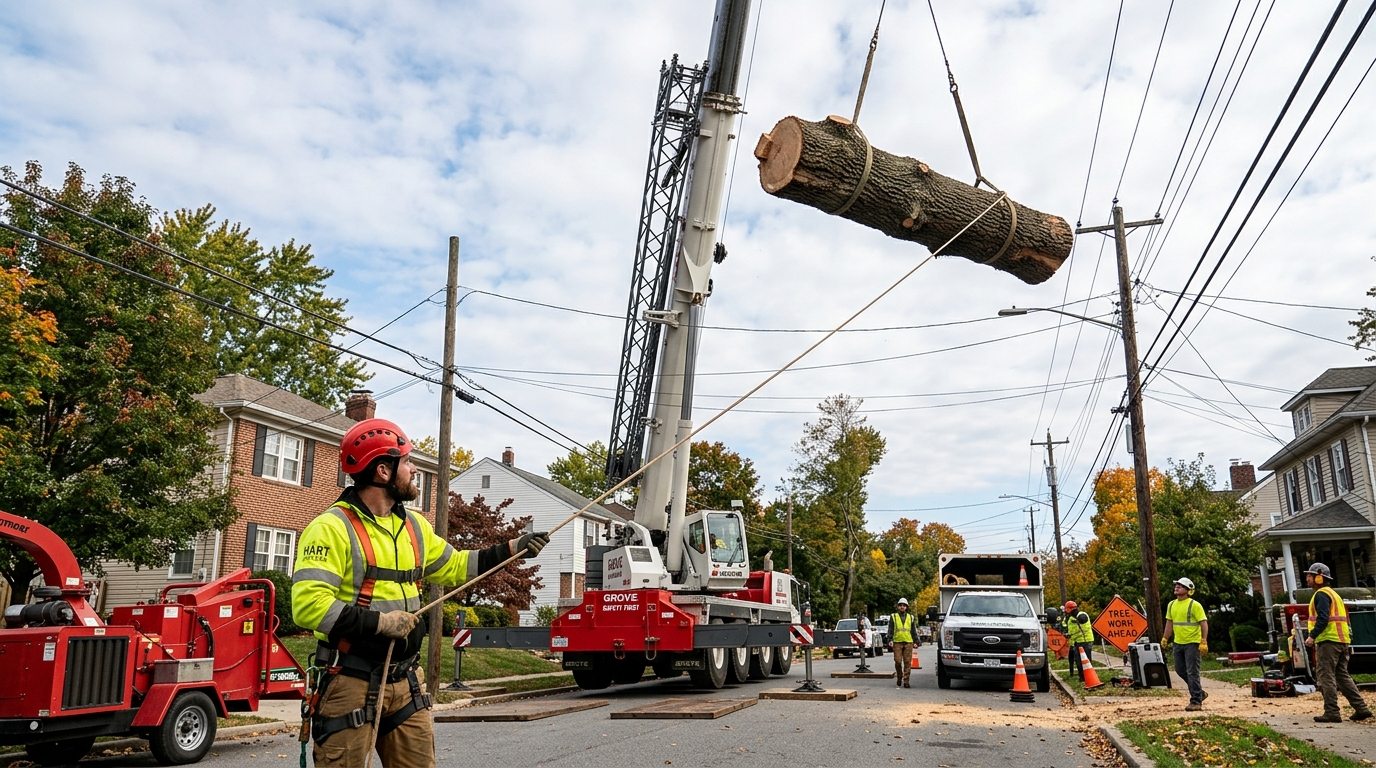
In Pennsylvania, the basic rule is: where the tree lands dictates who pays. Under the legal "Act of God" doctrine, if a healthy tree blows over onto your neighbor’s property during a storm, the neighbor’s homeowners insurance policy covers the cleanup and damage on their land. However, an important negligence exception applies: if the tree was visibly dead, rotted, or dangerous, and the owner had prior notice but failed to act, the tree owner is legally liable for all resulting property damage.
When severe wind or ice storms sweep through Allegheny County, tree boundary disputes are among the most contentious issues neighbors encounter. Understanding Pennsylvania common law and insurance policy guidelines helps avoid costly lawsuits and ensures emergency crews can perform emergency tree removal in McKeesport without delay.
1. The "Act of God" Doctrine (Healthy Trees in Storms)
Under established Pennsylvania jurisprudence, severe weather events—such as gale-force convective gusts, heavy blizzards, and microbursts—are legally classified as Acts of God (vis major).
If a seemingly healthy, living tree rooted on Property A blows over during a storm and crashes onto the garage or driveway of Property B:
- Neighbor B's Insurance Pays: Neighbor B must file a claim with their own homeowners insurance company. Neighbor B's policy will pay to remove the timber from their structure, repair the garage, and cover reasonable debris disposal, subject to Neighbor B's deductible.
- Owner A is NOT Liable: Simply owning the land where the tree’s roots were anchored does not create legal liability. As long as Owner A had no reason to believe the tree was defective, they are not negligent under tort law.
2. The Negligence Exception (Barker v. Brown Precedent)
The legal outcome changes completely if the tree was visibly dead, heavily rotted, or structurally decayed prior to the storm. Under the landmark Pennsylvania Superior Court case Barker v. Brown (1975), a landowner has an affirmative duty to inspect and maintain trees on their land that pose an unreasonable risk of harm to adjoining properties.
If Neighbor B previously noticed that Owner A's tree was dead, documented large fungal conks, and notified Owner A in writing:
- Owner A is Legally Negligent: By ignoring an obvious hazard, Owner A breached their duty of care.
- Subrogation by Insurance: Neighbor B's insurance carrier will pay the initial claim, then initiate subrogation against Owner A (or Owner A's liability insurer) to recover the repair costs, cleanup expenses, and Neighbor B's deductible.
3. Pennsylvania "Self-Help" Rule for Overhanging Limbs
What can you do before a neighbor’s tree falls? Under Pennsylvania law (Jones v. Wagner, 1993), property owners possess a recognized right of "self-help."
- Trimming to the Boundary Line: You may hire an arborist to trim overhanging branches or encroaching roots up to your exact property boundary line at your own expense.
- Crucial Limitation: You cannot trespass onto your neighbor's property without permission, and you cannot prune so aggressively that you destabilize or kill the tree. If your trimming causes the tree to die, you may be held liable for timber trespass damages. Dispatched professionals utilize precision emergency limb removal to keep pruning strictly compliant with ANSI A300 arboricultural standards.
Step-by-Step Guide to Handling a Neighbor Tree Dispute
- Communicate Calmly in Person First: Most neighbors genuinely do not realize their tree is structurally compromised. Point out dead branches or soil heave respectfully.
- Get a Certified Arborist Assessment: Have an ISA-certified arborist evaluate the specimen and generate a written Tree Risk Assessment Qualification (TRAQ) report.
- Send a Formal Written Notice via Certified Mail: If the neighbor refuses to address an obvious dead tree, send a friendly but formal letter enclosing the arborist's report via Certified Mail with Return Receipt. This establishes actual constructive notice under PA law, eliminating their ability to claim an "Act of God" if it falls.
- Execute Immediate Emergency Stabilization if Impact Occurs: If a tree has already collapsed across your boundary line, dispatch crews immediately for fallen tree extraction and emergency roof tarping to prevent ongoing water damage while insurance adjusters review liability.
Pennsylvania Tree Liability Quick Reference Table
| Scenario | Responsible Insurance Policy | Who Pays the Deductible? | Legal Basis |
|---|---|---|---|
| Healthy tree blows down in severe storm | The property owner where the tree lands (Neighbor B) | Neighbor B | "Act of God" doctrine; no landowner fault. |
| Dead / rotting tree with prior written notice falls | Tree owner's liability policy (via subrogation) | Tree Owner (Neighbor A) | Landowner negligence under Barker v. Brown. |
| Healthy branch overhangs your fence line | You pay if you choose to trim it | You (No insurance claim) | Self-Help Doctrine (Jones v. Wagner). |
| Tree falls on open yard with no building damage | Varies; many policies cap debris removal unless driveway is blocked | Property owner where timber rests | Standard HO-3 debris limitations. |
Need an Immediate Extraction or Hazard Evaluation?
Whether you need emergency timber removed from your home today or require an arborist evaluation of a dangerous boundary tree (hazardous tree removal), our dispatch network is available 24 hours a day across McKeesport and the Mon Valley.
Fallen Tree Across Your Property Line in McKeesport?
Our dispatch desk connects you with insured tree removal crews for immediate emergency clearance.
Call for Immediate Dispatch: (412) 658-9875